
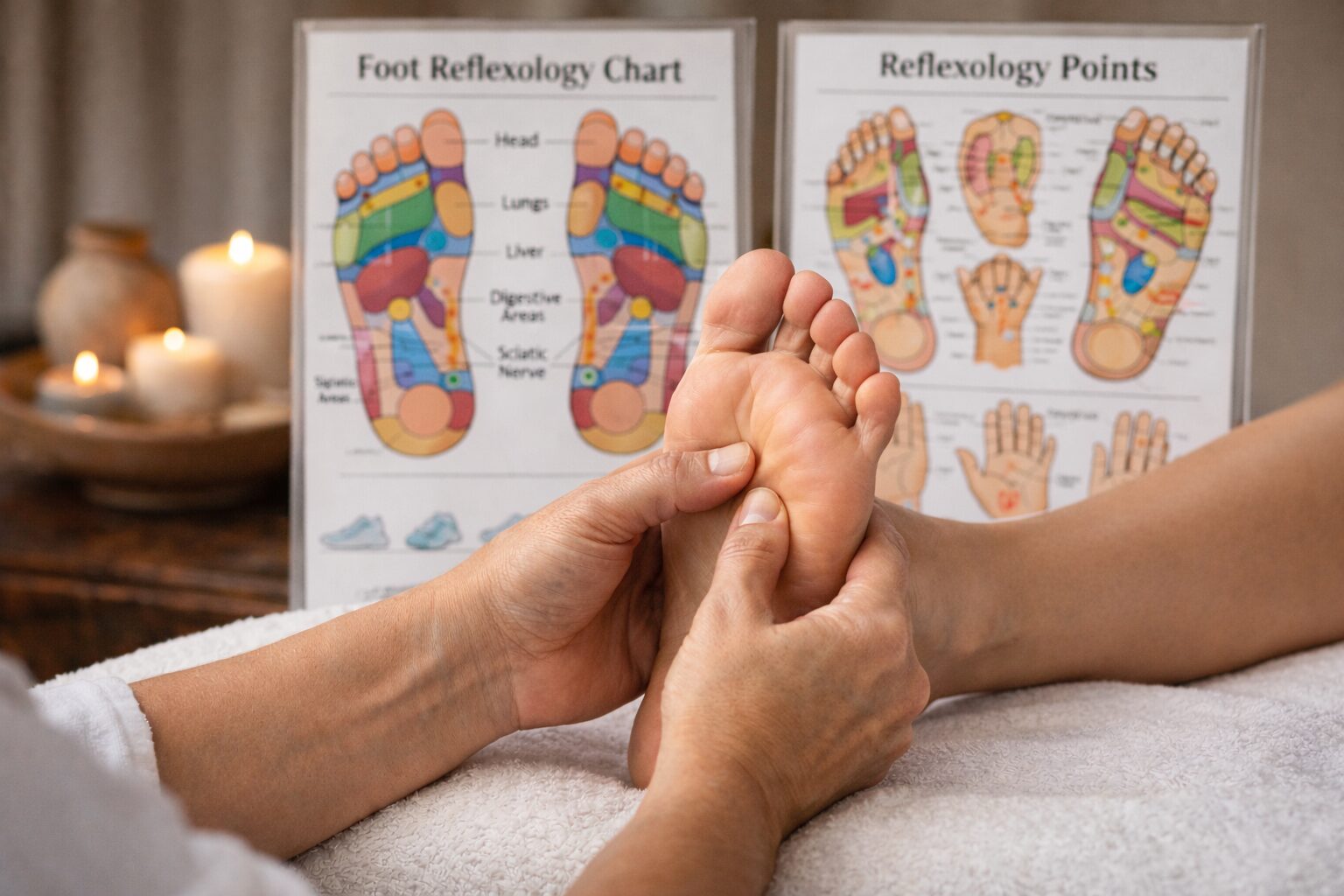
Reflexology has grown significantly in popularity over the past few decades, from holistic wellness circles to mainstream spas and therapeutic clinics. Yetdespite its many advocates, this centuries-old practice remains surrounded by myths and misunderstandings.
At High Stone Reflexology, serving clients in reflexology Flower Mound, TX and reflexology Colleyville TX, we’ve heard them all. Let’s debunk 7 of the most common myths about reflexology and uncover what science actually says helping you make informed decisions about your wellness journey.
1. Myth: Reflexology Is Just a Fancy Foot Massage
This is one of the most widespread misconceptions.
A typical foot massage mainly focuses on relaxation, muscle tension relief, and general circulation. In contrast, reflexology massage and pressure point therapy target specific “reflex zones” believed to be connected to other parts of the body. These practitioners believe that applying controlled pressure to these points can influence physiological responses and promote relaxation throughout the body.
While both reflexology and massage offer relaxation benefits, reflexology is distinct in its theory and application especially when performed by trained professionals.
2. Myth: Reflexology Is Purely Pseudoscience
Critics often label reflexology as lacking scientific merit. It’s true that reflexology therapy, including foot reflexology, is rooted in theories like energy flow and reflex networks that don’t fully align with Western anatomy.
However, science doesn’t dismiss all benefits. Research has shown that targeting pressure points may help reduce stress, improve mood, and in some cases, help with pain management and sleep quality.
While more robust clinical trials are needed, many studies have found modest but measurable effects on relaxation and well-being, suggesting reflexology isn’t entirely without merit.
3. Myth: Reflexology Can Cure Specific Diseases
One of the most harmful myths is that reflexology can cure major diseases like cancer, diabetes, or heart disease.
The truth? There’s no high-quality evidence showing reflexology directly cures any specific medical condition. It should never be used in place of medical treatment for serious illnesses.
What reflexology can do is offer supportive care helping to reduce stress, relieve pain, and improve overall quality of life alongside traditional treatments. Some patients report fewer side effects from treatment regimens or improved relaxation when reflexology is integrated into a comprehensive care plan.
4. Myth: Reflexology Is Painful or Harmful
A common fear is that applying pressure to specific points will cause pain or injury.
In reality, a trained reflexologist adjusts their touch based on your comfort level. Most people describe reflexology sessions as deeply relaxing or soothing, and although some pressure points may feel sensitive, serious discomfort is uncommon when done properly.
Reflexology is generally considered safe for most people. That said, if you have foot injuries, open sores, fractures, or certain circulatory conditions, consult a medical professional before booking a session.
5. Myth: Reflexology Works Instantly Every Time
Some people expect reflexology to deliver dramatic results after just one session like instant pain relief or stress elimination.
The reality? Benefits from reflexology therapy such as reduced stress, better sleep, or pain modulation typically develop over multiple sessions. Think of it as a holistic wellness practice rather than a quick fix. Regular sessions often produce the best outcomes, especially for chronic tension or stress-related issues.
6. Myth: Only Foot Reflexology Matters
Although foot reflexology is the most recognized form, reflexologists also work with hands and ears.
Each part of the body has its own set of reflex points. For example, hand reflexology might benefit someone who can’t easily have foot pressure applied such as people with certain injuries. Using a combination of body zones allows practitioners to tailor treatments to individual needs.
7. Myth: Reflexology Is the Same Everywhere
Just because two places offer reflexology doesn’t mean the experience or results will be the same.
A professional reflexologist undergoes specialized training to understand reflex point charts, body mechanics, and how to adjust pressure safely and effectively. That’s why choosing experienced practitioners like those at High Stone Reflexology in Flower Mound TX or Colleyville TX is crucial for a positive and effective experience.
So What’s the Real Science Behind Reflexology?
Here’s the honest bottom line:
- Reflexology isn’t a miracle cure rooted in rigorous scientific proof.
- However, it does have measurable benefits for stress relief, relaxation, improved sleep, and pain modulation.
- Many studies point to reflexology’s role in activating the body’s parasympathetic nervous system, the “rest and digest” mode which helps reduce cortisol levels and ease tension.
Even if the traditional charts and theories aren’t yet fully validated scientifically, the therapeutic touch, human connection, and focused pressure can truly feel beneficial both physically and mentally.
Final Thoughts
Reflexology remains a complementary therapy one that blends ancient tradition with modern wellness goals. Whether you’re curious about reflexology massage, stress relief, or simply seeking a relaxing experience, understanding what it is and what it isn’t helps set realistic expectations.
At High Stone Reflexology, we’re proud to offer expert reflexology therapy tailored to your body’s needs. Whether you’re in reflexology Flower Mound, TX, or reflexology Colleyville TX, our trained professionals are here to guide your wellness journey with care, comfort, and clarity.